What is British Square?
British Square Solitaire is a suit-building patience game with a bidirectional foundation structure and a locked-direction tableau mechanic. Foundations build both upward (Ace to King) and downward (King back to Ace) for each suit, and the tableau columns commit to one direction — upward or downward — after the first card is placed. This locking rule means early tableau decisions have long-term consequences throughout the game.
Full rules
Two standard decks (104 cards) are used. Each suit has one foundation that builds Ace to King, takes a second King, and then builds down to Ace. Sixteen cards are dealt into four tableau columns; the remaining 88 form the stock, dealt one card at a time.
A top tableau card can move to its suit's foundation when it matches the next required rank. Stock cards go automatically to a legal foundation or tableau column, otherwise to waste. The critical rule: the first card placed on a column determines whether that column builds upward or downward for all subsequent placements. A column cannot switch direction once committed. Empty columns can receive any card (resetting their direction for the next placement).
The direction-locking mechanic
Direction locking is British Square’s defining challenge. Once you place a 7 on a column that already has a 6 (making it an upward-building column with sequence 6–7), that column can only receive 8, 9, 10, and so on. It cannot accept a 5, even if a 5 would be useful there.
This means the choice of which card to place on each column — especially early — creates a permanent commitment. Placing a high-rank card on a column commits it to descending needs. Placing a low-rank card commits it to ascending needs. With only four columns, having two committed upward and two committed downward is the natural balance to aim for.
Read the British Square strategy guide →
Bidirectional foundations
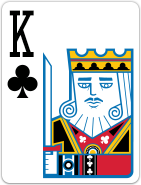
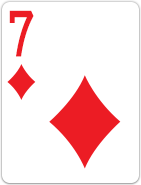
Each suit's foundation changes direction after both Kings have been played. A 7 of hearts fits on a 6 during the ascending half, or on an 8 during the descending half. The second King is essential: a Queen cannot begin the descent until it is in place.
The four-column tableau means foundation flow depends heavily on column direction choices. A well-directed set of columns — two ascending, two descending — supports foundation plays in both directions with minimal waste.
How British Square compares
- Tournament — bidirectional foundations; no tableau building at all
- Crescent — two-deck bidirectional foundations; fan rotation mechanic
- Archway — two-deck bidirectional foundations; fully open arch reserve
British Square is part of Clocktower · Layout, cross & clock-face games.
More Layout, cross & clock-face games games
- Windmill — Center and corner foundations, windmill layout.
- Big Ben — Clock-face foundations building by suit.
- Braid — Herringbone layout feeding eight foundations.
- Long Braid — Twenty-four braid cards and six cells open to the braid tip.
- British Blockade — Build eight Ace and King foundations from a ten-column blockade that grows row by row.
- Captive Queens — Four Queens sit inside a ring of descending Fives and ascending Sixes.
Also try
- Emperor (Forty Thieves & two-deck builders) — Two-deck Forty Thieves relative with waste play.
- Intrigue (Court games) — Eight Queen columns; eight Five-piles built down to the King and eight Six-piles built up to the Jack, regardless of suit.
- Milligan Cell (Miss Milligan & row dealers) — Four free cells add temporary storage to Miss Milligan’s eight columns.
Learn